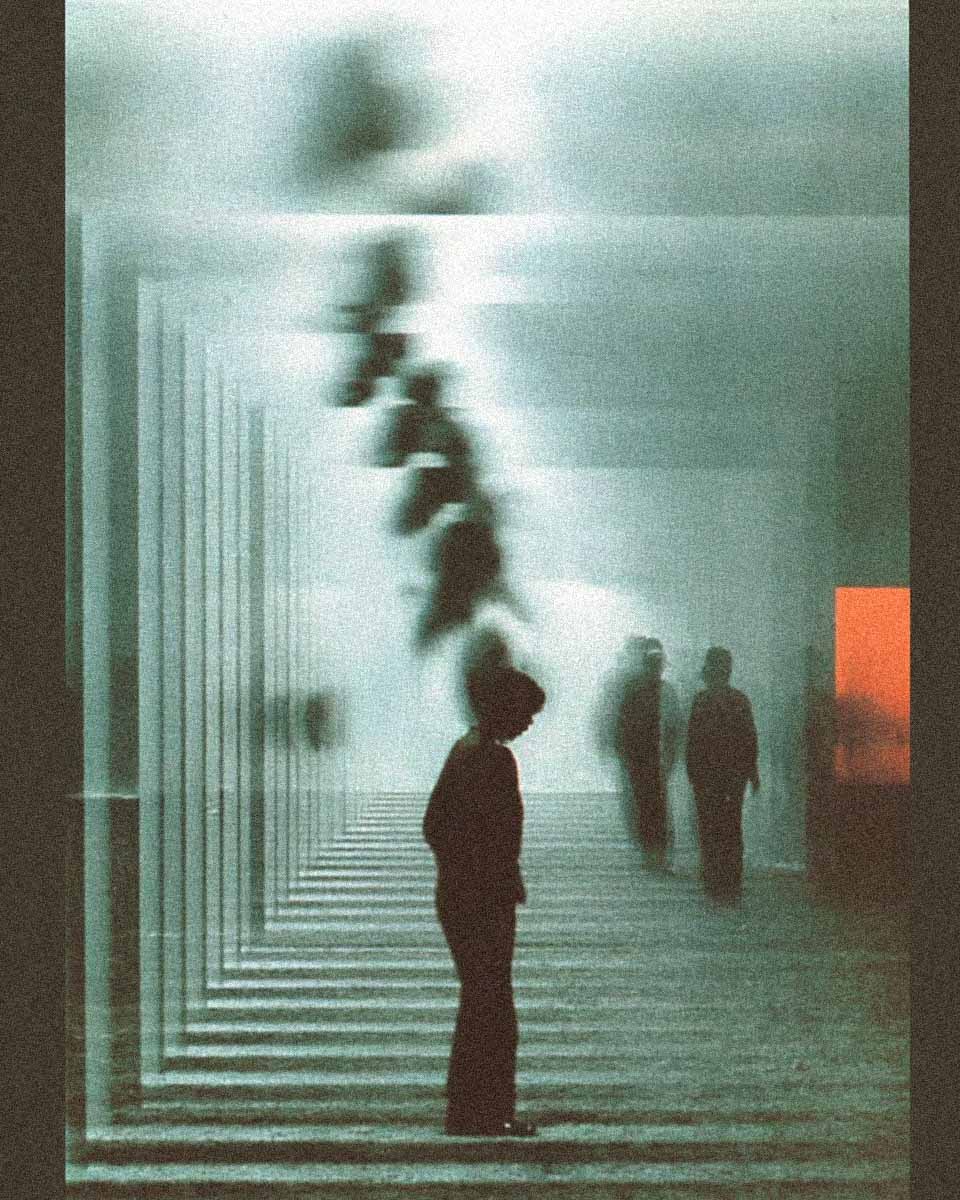
There’s a moment we all know too well: you open your phone, meaning to check something quickly, and suddenly, an hour has disappeared. Your thumb moves on autopilot, swiping down, down, down—past vacation photos, viral videos, half-baked opinions, and algorithmically curated distractions. You are not reading anymore, not even consuming, but existing in a state of passive engagement.
This is the world of infinite scroll. It never asks you to stop. There is no natural ending. Like an endless buffet where each plate is more mediocre than the last, but you keep eating because, well, it’s there and it’s free.
But what does this constant access to digital abundance do to us? And what happens when a society has everything it needs, all the time? Do we become lazy, passive, and numb—like overstimulated users lost in the scroll?
The Psychology of the Infinite Scroll
Infinite scroll was designed to remove friction. Before, you had to click “Next Page” or choose what to engage with. Now, the content simply appears, and your only job is to keep scrolling. This design choice, introduced by Aza Raskin in 2006, was meant to improve user experience. Instead, it became a behavioral trap.
At its core, infinite scroll plays on variable rewards, the same psychological principle that makes slot machines addictive. You don’t know what the next swipe will bring—maybe it’s boring, but maybe it’s something thrilling, something shocking, something that makes you laugh. The uncertainty keeps you hooked.
Dopamine, the neurotransmitter responsible for motivation and reward, fuels this cycle. Each scroll delivers a tiny hit of pleasure, reinforcing the behavior. But unlike a book, a magazine, or even an old-school website with pagination, infinite scroll has no built-in stopping point. No cue to reflect. No signal that enough is enough.
It’s not just about addiction. It’s about passivity. You don’t choose what you consume—the algorithm does. You move from one piece of content to the next with no real engagement, no deep thought. You are busy but inactive, entertained but uninspired. And this phenomenon extends far beyond our screens.
Abundance and the Paradox of Satisfaction
Now, let’s zoom out. What happens when a society achieves abundance—when everything is readily available, when effort is no longer necessary for survival?
In many ways, modern life in developed societies mirrors infinite scroll. Food is available at all times, but much of it is processed and unsatisfying. Entertainment is endless, but rarely fulfilling. The more we have, the less we value it. The more convenience we create, the harder it becomes to find meaning.
Sociologist Jean Baudrillard explored this in his theory of hyperreality—a state in which reality is replaced by an endless stream of images, symbols, and signs. In hyperreality, people don’t seek truth; they seek stimulation. We consume not because we need to, but because we can. The distinction between necessary and unnecessary, real and artificial, collapses.
Historically, abundance was an anomaly. Human existence was defined by scarcity. We worked to secure food, shelter, and safety. Societies that thrived were those that innovated, that struggled, that competed. But today, in much of the developed world, that struggle is absent.
And so, we invent new struggles. Social media wars, outrage cycles, self-imposed digital addiction—anything to break the monotony of having “enough.”
When Everything Is Possible, Nothing Feels Necessary
A society that has everything risks losing its drive. Consider the Overjustification Effect—a psychological principle where external rewards reduce intrinsic motivation. When children are given money for drawing, they lose interest in drawing for fun. When people are paid simply for existing (via universal income, passive wealth, or government assistance), some lose the drive to create, innovate, or even participate in meaningful work.
Luxury can dull the human spirit. Think of the Roman Empire at its peak—excess, decadence, and a loss of civic responsibility. Bread and circuses replaced engagement. The citizens became spectators. Eventually, the empire crumbled.
Today, we see a modern version of this phenomenon. Work is easier, leisure is abundant, and digital escapism is limitless. But instead of leading to utopia, it leads to restlessness and discontent. Anxiety, depression, and a pervasive sense of emptiness grow despite material comfort. Why? Because humans are wired for struggle. We need friction, challenges, and limitations to find meaning.
Can We Escape the Scroll?
If infinite scroll and abundance make us passive, the antidote must be intentional friction. We need ways to impose structure where none exists.
1. Create artificial endings. Whether it’s setting screen time limits, choosing books over social media, or committing to deep conversations instead of endless digital chatter, we must reintroduce boundaries.
2. Seek real-world struggle. Physical challenges, intellectual rigor, and meaningful work create purpose. Whether it’s a difficult project, a sport, or even the discipline of mastering a skill, friction breeds engagement.
3. Relearn how to be bored. Abundance teaches us that stimulation is always available. But boredom is necessary—it sparks creativity, introspection, and real engagement with the world.
4. Redefine success. In a world where everything is handed to us, we must choose what matters. Success can’t just be comfort—it must involve growth, contribution, and depth.
Conclusion: Swiping Towards the Void?
Infinite scroll is not just a tech feature—it’s a metaphor for modern existence. We live in a world of endless supply, endless distraction, endless stimulation. And yet, many feel empty, disengaged, and unsatisfied.
If history has taught us anything, it’s that societies built on abundance without purpose are at risk of collapse—not just physically, but spiritually. The challenge is not in having more, but in learning when to stop.
Because the scroll will never end. The question is—will we?